If you’re considering a career in trucking, the first step is obtaining a Commercial Driver’s License (CDL). A CDL allows you to legally operate large commercial vehicles such as tractor-trailers, buses, and other heavy trucks.
Despite all the noise around autonomous driving, AI and robotics, the demand for professional truck drivers remains strong in 2026, and employment is projected to grow 4% to 2034 (source: BLS). In addition, many companies offer competitive pay, benefits, and even paid CDL training programs. If you’re wondering how to get started, this step-by-step guide explains exactly how to get a CDL and begin your trucking career.
But before you begin the process, it’s worth mentioning to ask yourself if this is really the career path you want. Although truck drivers are still in demand, pay can be decent (if you’re employed at one of the better companies), there’s a sense of freedom you experience on the road, and you’ll meet all sorts of interesting people, this career can also be quite taxing. Long hours on the road, distance from family and friends, health risks, long waits, boredom, and crappy pay are some of the common complaints. In all honesty, however, the pros do outweigh the cons.
Step 1: Meet the Basic CDL Requirements
Before applying for a CDL, you must meet several basic requirements. These requirements are set by federal regulations but may vary slightly by state.
In most states, you must:
- Be at least 18 years old to drive commercially within your state
- Be 21 years old to drive across state lines (interstate trucking)
- Hold a valid driver’s license
- Provide proof of identity and residency
- Pass a Department of Transportation (DOT) medical exam
- The DOT medical exam ensures that drivers are physically able to safely operate commercial vehicles.
Step 2: Choose Your CDL Class and Endorsements
Commercial driver’s licenses are categorized into different classes depending on the type of vehicle you plan to operate.
Class A CDL
Allows drivers to operate tractor-trailers and most large commercial vehicles. This is the most common CDL for long-haul trucking careers.
Class B CDL
Used for vehicles such as delivery trucks, buses, and dump trucks.
Class C CDL
Required for smaller commercial vehicles transporting hazardous materials or large numbers of passengers.
Special Endorsements
You may also need special endorsements for certain types of cargo, including:
- Hazardous materials (HazMat)
- Tank vehicles
- Passenger vehicles
- School buses
Each endorsement may require additional testing or background checks.
Step 3: Obtain a Commercial Learner’s Permit (CLP)
The next step toward getting a CDL is obtaining a Commercial Learner’s Permit (CLP). This permit allows you to practice driving a commercial vehicle while supervised by a licensed CDL holder.
To receive your CLP, you must pass several written knowledge tests at your local Department of Motor Vehicles (DMV). These tests cover topics such as:
- General trucking knowledge
- Road safety regulations
- Vehicle inspection procedures
- Air brake systems (if applicable)
Studying the CDL handbook provided by your state is the best way to prepare for these exams.
Once you pass the written tests and background checks, your CLP will be issued. Most states require you to hold the permit for at least 14 days before taking the CDL skills test.
Step 4: Complete CDL Training
Dreamstime.com
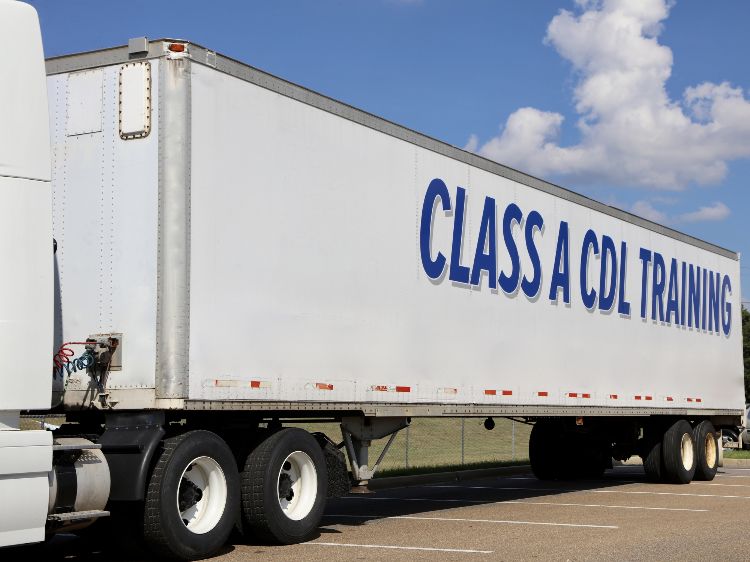
Before you can take the skills test, you must provide proof of training from an FMCSA-certified provider.
CDL training programs typically teach:
- Basic truck operation
- Backing and maneuvering
- Pre-trip vehicle inspections
- Road driving techniques
- Safety procedures
Training programs usually take 3 to 8 weeks to complete, depending on the school and program structure.
There are several types of CDL training options available:
Private Truck Driving Schools
Independent schools provide professional instruction but require tuition, which typically ranges from $3,000 to $7,000.
Company-Sponsored CDL Training
Some trucking companies offer free or low-cost training programs in exchange for a work commitment after graduation.
Community College Programs
Some community colleges offer CDL programs that may qualify for financial aid or workforce training grants.
Choosing the right training option depends on your budget, schedule, and long-term career goals.
Step 5: Pass the CDL Skills Test
After completing your training and holding your learner’s permit for the required period, you can schedule your CDL skills test.
The skills test usually includes three parts:
1. Vehicle Inspection Test
You must demonstrate your ability to inspect the truck and identify potential safety issues.
2. Basic Control Skills Test
This portion evaluates your ability to perform maneuvers such as backing, turning, and parking.
3. Road Test
The examiner will observe your ability to drive safely in real traffic conditions.
Passing all three sections is required to receive your CDL.
Step 6: Start Your Truck Driving Career
Once you receive your CDL, you can begin applying for truck driving jobs. Many new drivers start their careers with large trucking companies that offer entry-level positions and on-the-job training.
Starting salaries for new truck drivers vary, but many drivers earn $50,000 to $70,000 per year within their first few years on the road. Experienced drivers and specialized freight haulers may earn significantly more.
Truck driving can also offer opportunities for advancement, including becoming a trainer, dispatcher, or owner-operator.
Final Thoughts
Getting a CDL is the first step toward starting a rewarding career in the trucking industry. While the process requires training, testing, and preparation, most people can obtain their CDL within a few weeks.
By meeting the requirements, completing CDL training, and passing the skills test, you can begin a career that offers strong demand, steady income, and opportunities to travel across the country.
For many people, becoming a professional truck driver is not just a job—it’s a career path with long-term opportunities and growth.
TruckersTraining.com provide information, tools and resources to potential truck drivers in the U.S. We hope that you can use the content on the site to help you decide if want to drive trucks for a living.